SIP trunking is revolutionizing how businesses communicate. Instead of relying on expensive traditional phone lines, companies are switching to SIP trunking solutions to handle voice communication over the internet—reducing costs by up to 60% while improving scalability and flexibility.
In this comprehensive guide, we'll explain what SIP trunking is, how it works, why it matters for your business, and how to choose the right SIP trunk provider to transform your communication infrastructure.
What is SIP Trunking? A Simple Definition
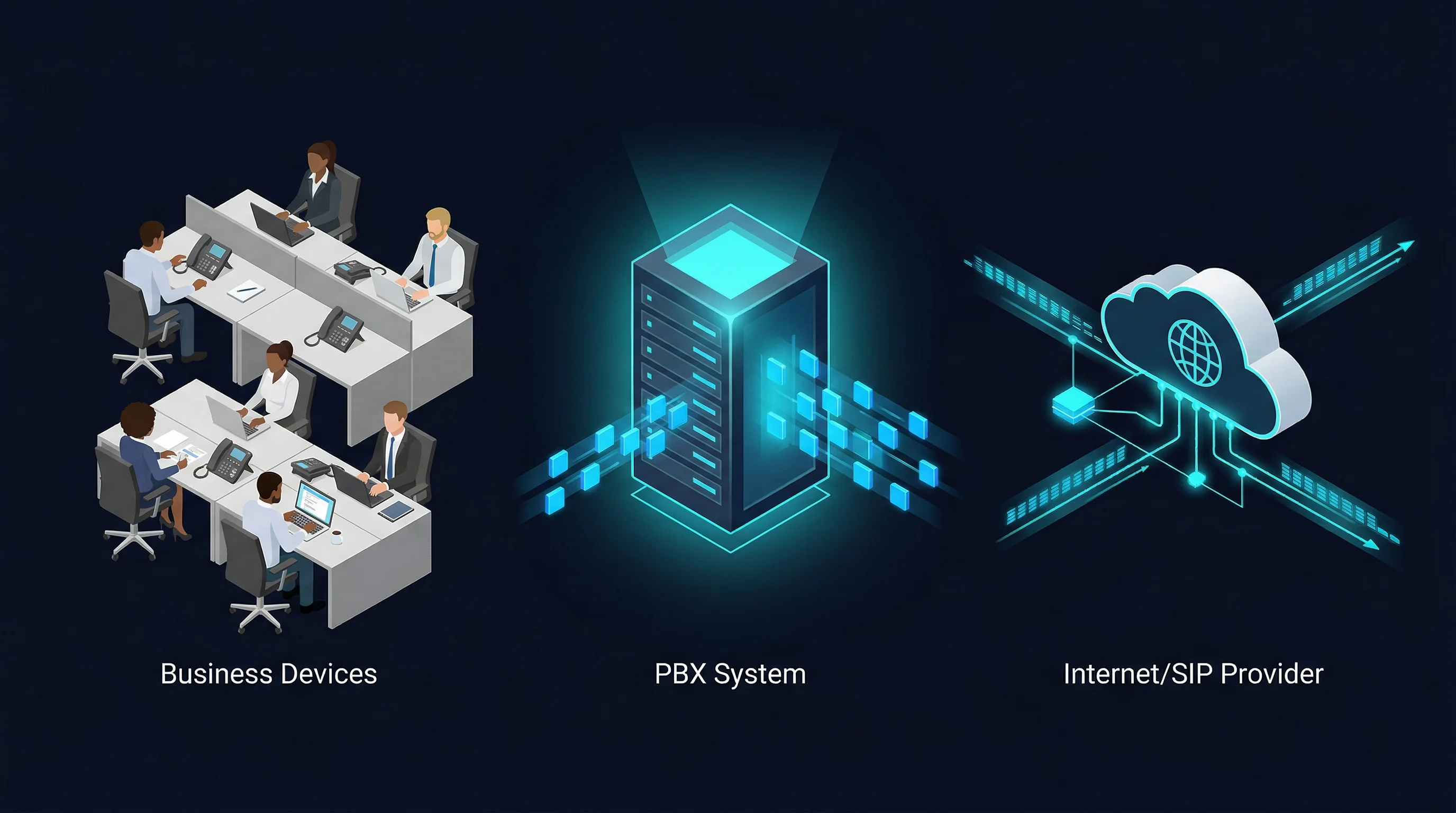
SIP stands for Session Initiation Protocol. In simple terms, SIP trunking is a method of transmitting voice calls over the internet instead of through traditional phone lines (PSTN—Public Switched Telephone Network).
Think of it this way: Traditional phone systems use physical copper lines to carry your voice to the telephone company's infrastructure. SIP trunking, on the other hand, converts your voice into digital packets and sends them through your internet connection. This allows you to make and receive calls without expensive dedicated phone lines.
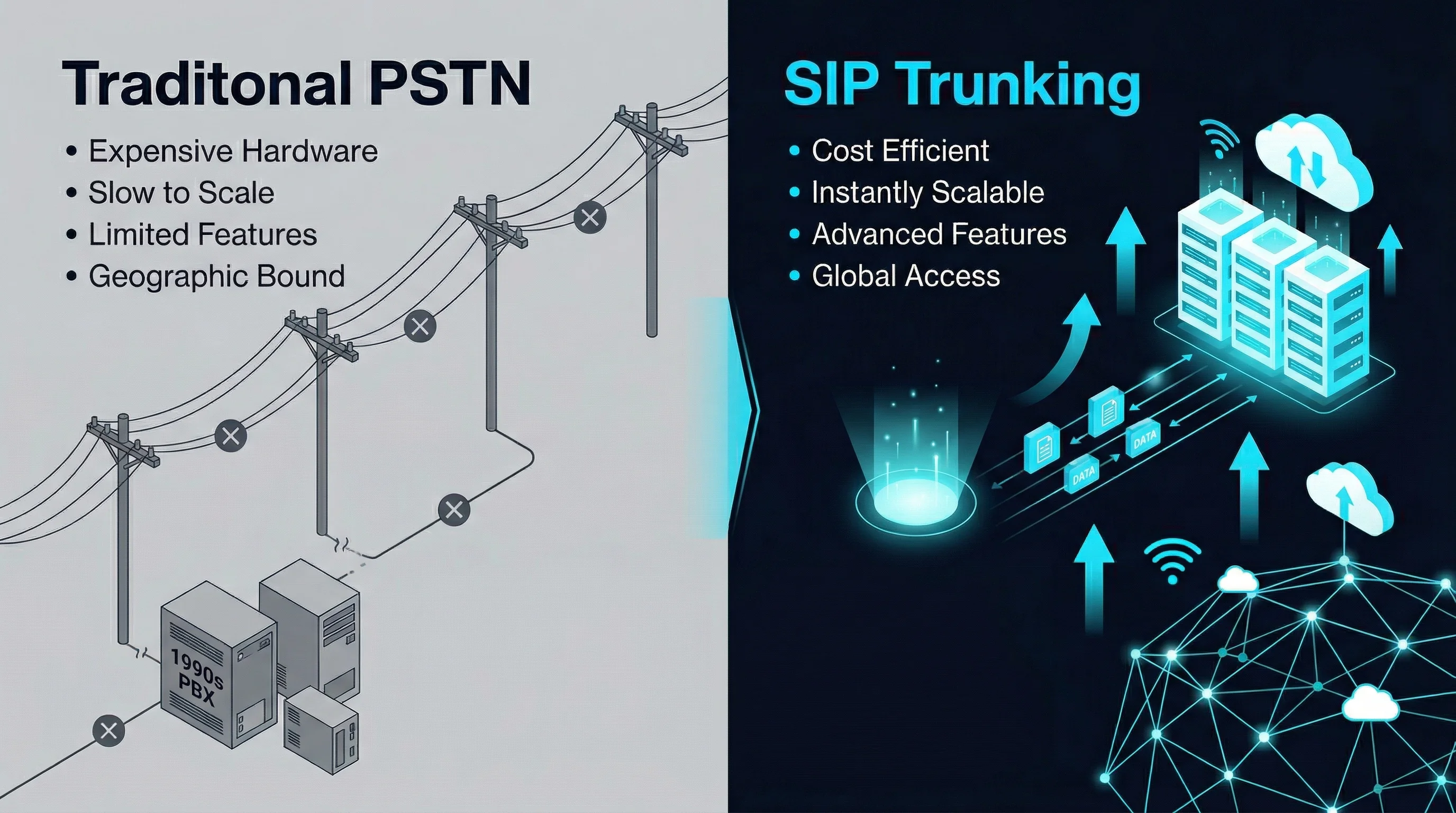
SIP Trunking vs. Traditional Phone Systems (PSTN)
| Feature | SIP Trunking | Traditional PSTN |
|---|---|---|
| Infrastructure | Internet-based (IP network) | Physical copper phone lines |
| Cost per Line | $15-30/month per trunk | $40-100/month per line |
| Scalability | Add trunks in minutes | Takes weeks to install lines |
| Setup Time | Hours to days | Weeks to months |
| Geographic Flexibility | Global, location-independent | Limited by geography |
| Feature Rich | Advanced features included | Basic features, costly upgrades |
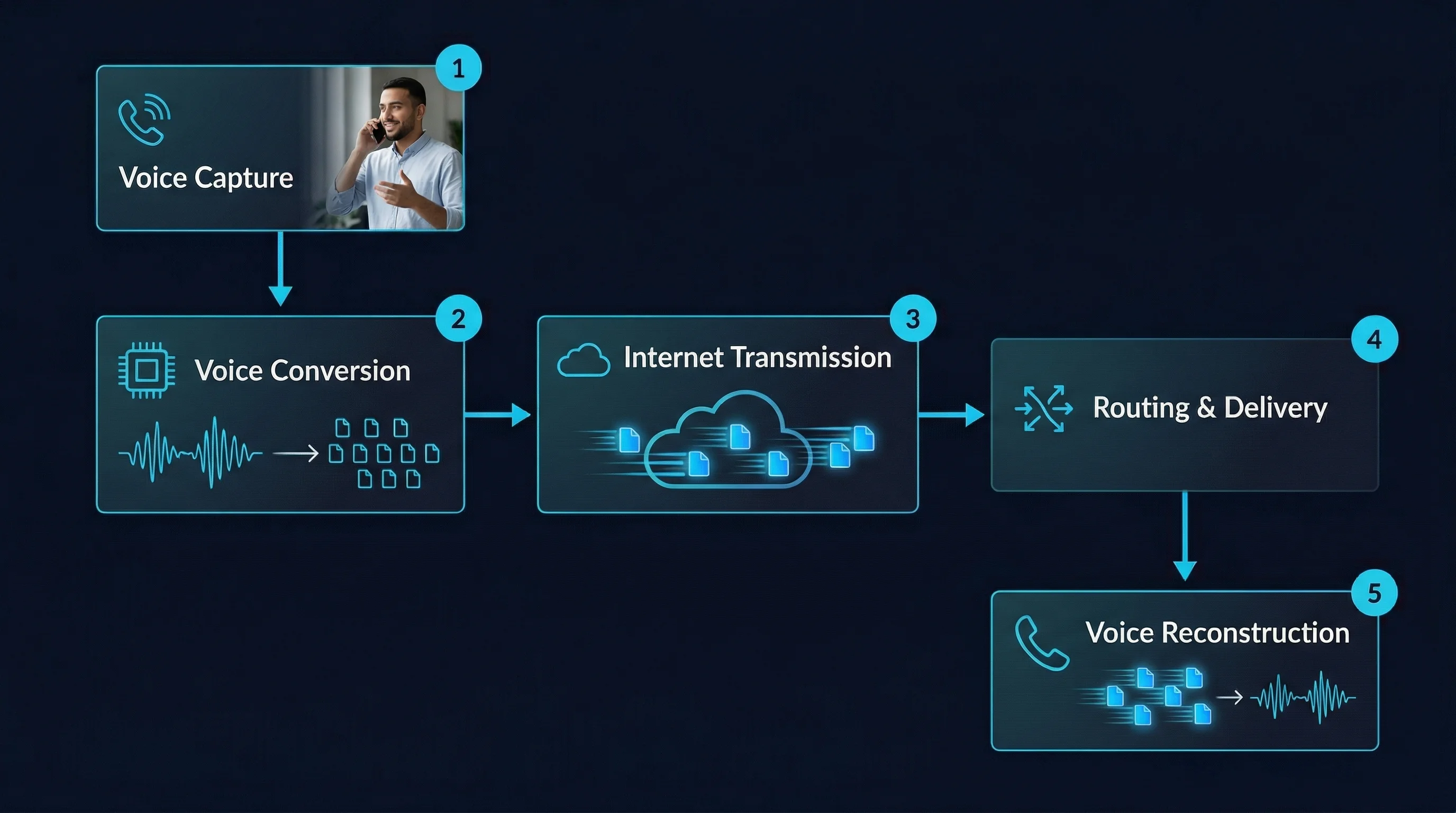
How SIP Trunking Works: Step-by-Step Explanation
Let's break down the technical process in a way that's easy to understand, whether you're running a small business or a large call center solution.
The 5-Step SIP Trunking Process
- Voice Capture: When an employee makes a call through their phone (desk phone, softphone, or mobile app), the analog voice signal is captured by the PBX (Private Branch Exchange) system.
- Voice Conversion: The PBX converts the analog voice into digital packets using the SIP protocol. These packets are essentially small chunks of data containing your voice information.
- Internet Transmission: These digital packets travel through your internet connection to your SIP trunk provider's network. This is where the magic of cost savings happens—you're using your existing internet bandwidth instead of dedicated phone lines.
- Routing & Delivery: Your SIP provider routes the call to the recipient. If calling another SIP user, it connects directly. If calling a traditional phone number, the provider converts it back and sends it through the PSTN network.
- Voice Reconstruction: On the receiving end, digital packets are reassembled back into clear, audible voice communication.
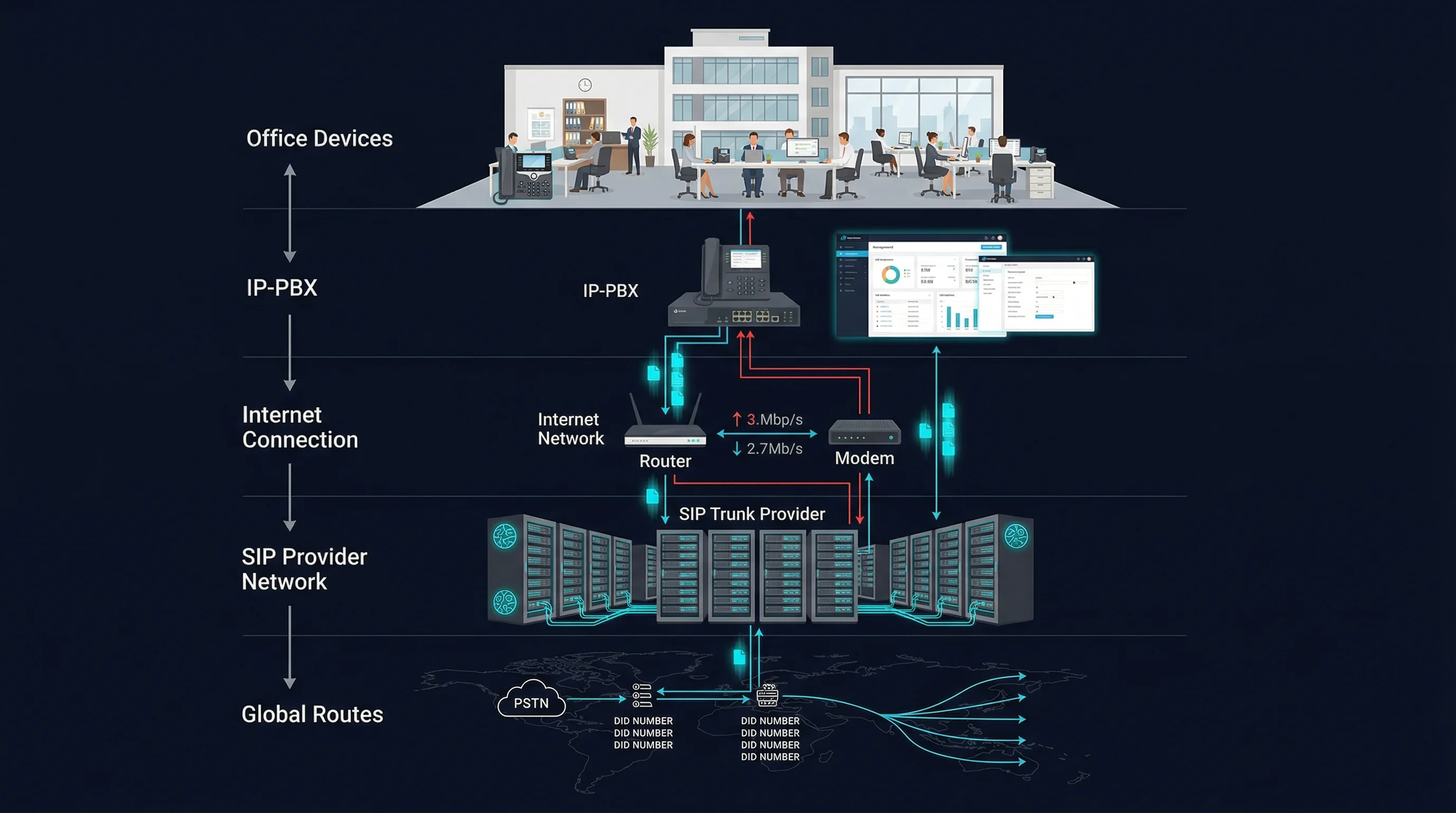
Key Components of a SIP Trunking System
1. PBX or IP-PBX
Your Private Branch Exchange (PBX) is the control center. It's either a physical device or cloud-based system that manages your internal phone extensions and connects them to the outside world via SIP trunks.
2. SIP Trunk Provider
This is the company providing your connection to the public phone network. A reliable wholesale VoIP provider ensures high-quality calls, excellent uptime, and competitive pricing. NexGenVoice, for example, specializes in premium SIP trunking with 99.99% uptime guarantee.
3. Internet Connection
Your bandwidth quality directly affects call quality. We recommend a minimum of 100 Kbps per concurrent call. For a call center solution provider, a reliable broadband or dedicated connection is essential.
4. DID Numbers
A Direct Inward Dialing (DID) number allows external callers to reach specific extensions directly without going through a receptionist. When you buy DID numbers from your provider, you get local or toll-free numbers for any geographic region worldwide.
Top 7 Benefits of SIP Trunking for Businesses
Significant Cost Savings
Reduce communication costs by 40-60%. Pay per trunk instead of per physical line, and eliminate expensive long-distance charges.
Unlimited Scalability
Add or remove trunks instantly as your business grows. No installation technicians, no long waiting periods.
Global Reach & Local Presence
When you can buy DID numbers worldwide, establish a local presence in any country instantly.
Enterprise-Grade Reliability
99.99% uptime SLAs, automatic failover, and redundancy ensure your business stays connected 24/7.
Advanced Features
Call recording, IVR (Interactive Voice Response), call routing, and analytics—all included without extra hardware investment.
Flexibility & Mobility
Employees work from anywhere. Your business number works on desks, laptops, smartphones, and softphones—no location dependency.
Easy Integration
Works with your existing PBX, cloud systems, or Asterisk/Vicidial setups. No major infrastructure overhaul required.
SIP Trunking Use Cases: Who Needs It Most?
A cloud call center setup using SIP trunking can handle thousands of simultaneous calls without expensive legacy hardware. Scale agents up or down based on demand.
Large companies with multiple offices benefit from unified communication. Route calls across locations seamlessly, reduce telecom expenses, and maintain consistent quality globally.
Hybrid and remote teams need communication that travels with them. SIP trunking enables employees to maintain business presence regardless of location.
Expanding globally? When you can buy DID numbers in multiple countries, you establish instant local presence while using a single unified communication platform.
Schools and public agencies modernize communication infrastructure without massive capital investment. SIP trunking reduces operational costs while improving service delivery.
Hospitals and clinics need reliable, HIPAA-compliant communication. SIP trunking from enterprise providers offers the security and uptime healthcare demands.
Choosing the Best SIP Trunk Provider for Your Business
Not all SIP trunk providers are created equal. When selecting a SIP trunk provider USA or any region, consider these critical factors:
What to Look for in a SIP Trunk Provider
- Uptime & Reliability: Look for 99.99% or higher SLA with automatic failover. Your business depends on it.
- Call Quality: Premium providers guarantee crystal-clear voice quality with low latency (under 150ms).
- Global DID Inventory: Can you easily buy DID numbers worldwide for local presence in any country?
- Competitive Pricing: Compare wholesale VoIP services pricing models. Is it per-trunk or by minute? Any hidden fees?
- Local Support: Access to expert support when you need it, not just a chatbot.
- Scalability: Can the provider handle your growth from 5 to 500 concurrent calls?
- Security & Compliance: Encryption, DDoS protection, HIPAA compliance (if needed).
- Platform Compatibility: Works with your existing PBX, Asterisk PBX hosting, Vicidial, or cloud systems.
Why Choose NexGenVoice for SIP Trunking?
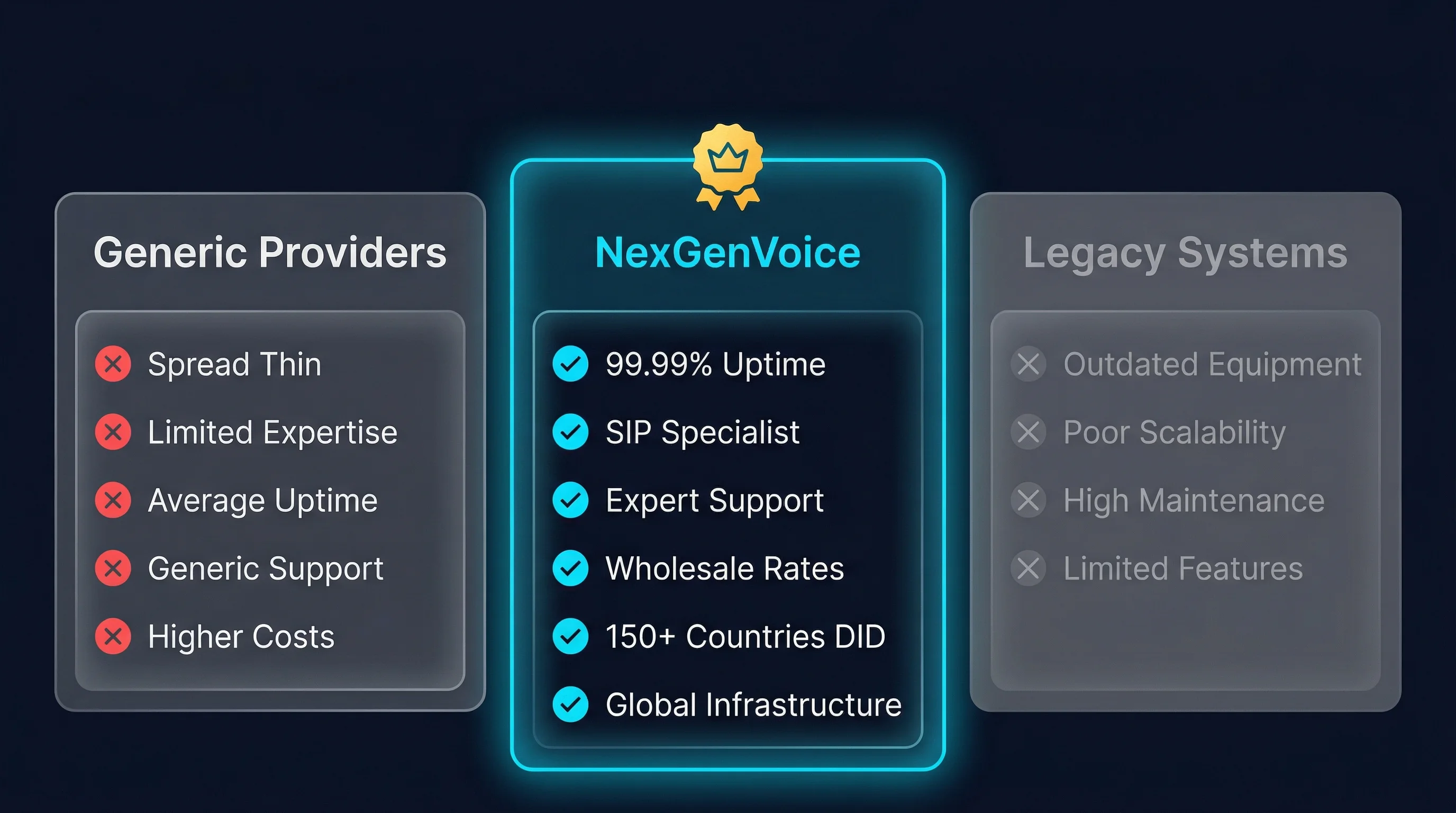
For over many years, NexGenVoice has been the trusted VoIP provider for call centers and enterprises. Here's why:
- 99.99% Guaranteed Uptime: Redundant infrastructure across multiple data centers. Your calls never stop.
- Crystal-Clear Quality: Premium codec support, optimized routing, and QoS prioritization.
- Global DID Availability: 150+ countries. buy DID numbers instantly for any location.
- Wholesale VoIP Solutions: As a wholesale VoIP provider, we offer competitive rates for resellers and enterprises.
- Expert Support: Dedicated account managers, not automated support. Available 24/7 via phone, email, and chat.
- Universal Compatibility: Works with any PBX, Asterisk, Vicidial hosting, or cloud system.
- Advanced Analytics: Real-time dashboards, call quality metrics, and detailed CDR reports.
How to Implement SIP Trunking in Your Business
Audit Your Current System
Evaluate your existing PBX, current telecom costs, and call volume. Do you have capacity to handle your peak traffic? This baseline helps determine how many trunks you'll need.
Choose Your Hardware
Option A: Keep your existing PBX and add SIP trunks.
Option B: Migrate to a cloud-based PBX (like FreePBX or 3CX hosted infrastructure).
Select a SIP Trunk Provider
Choose a reliable SIP trunk provider that matches your needs. Start with a pilot (5-10 trunks) to test quality and support.
Configure & Test
Work with your IT team or your provider's support team to configure SIP settings, load DID numbers, and test call routing thoroughly.
Migrate & Monitor
Move your production traffic gradually. Monitor call quality metrics, voice routing, and billing for the first month.
Ready to Transform Your Business Communications?
Join thousands of enterprises, call centers, and growing businesses that have cut telecom costs and improved reliability with NexGenVoice's premium SIP trunking services.
Get Free DemoNo credit card required. Our experts will analyze your current setup and show you exactly how much you can save.
Key Takeaways: SIP Trunking in 60 Seconds
- SIP trunking transmits voice over internet instead of expensive phone lines.
- You save 40-60% on telecom costs while gaining advanced features.
- It scales instantly—add trunks and buy DID numbers globally in minutes.
- Enterprise-grade reliability with 99.99% uptime when using a premium provider.
- Works with any PBX, cloud system, or legacy infrastructure.
- Perfect for call centers, remote teams, enterprises, and rapidly growing businesses.
- Choosing the right SIP trunk provider USA (or your region) is crucial—expertise matters.
- Implementation takes 1-6 weeks depending on complexity.
Conclusion: Why SIP Trunking is the Future of Business Communication
SIP trunking isn't a trend—it's the inevitable evolution of business communications. Companies that haven't migrated yet are paying premium prices for outdated infrastructure. Meanwhile, their competitors are reducing costs, scaling instantly, and serving customers globally with local phone numbers.
Whether you're running a call center solution, a remote-first company, or a multi-office enterprise, SIP trunking offers measurable benefits: lower costs, better reliability, and unlimited flexibility.
The only question is: which wholesale VoIP provider will you trust with your communications?
At NexGenVoice, we've spent over a decade perfecting premium SIP trunking. We know the challenges you face because we've solved them for thousands of businesses. From Fortune 500 companies to ambitious startups, we're the SIP trunk provider they call when quality and support matter.
Your next step is simple: Schedule a free 15-minute consultation. Let's talk about your specific needs, analyze your current costs, and show you a custom proposal. You'll understand exactly what you can save and how quickly you'll recoup your investment.
Start NowAddressing Common SIP Trunking Concerns
No—if implemented correctly. Quality depends on your internet connection, the codec used, and your provider's infrastructure. Premium providers like NexGenVoice guarantee call quality equivalent to (or better than) traditional phone systems.
SIP trunking is highly secure when proper encryption (TLS/SRTP) is implemented. Enterprise providers use firewalls, DDoS protection, and intrusion detection to keep your calls safe.
You don't need dedicated fiber, but you do need reliable bandwidth. For a 50-employee office, a standard 50 Mbps business broadband is usually sufficient. Call your provider for bandwidth recommendations based on your traffic.
Top-tier SIP trunk providers offer automatic failover. If your primary connection goes down, calls route through backup infrastructure automatically—transparent to your users.
Yes! Number porting is standard. Keep your current numbers while switching to SIP trunking. Most providers handle the porting process for free.
.png)