An Operating Company Number (OCN) is a four-character alphanumeric identifier used in the U.S. telecommunications industry to identify providers of local telecommunications service. OCNs are part of the numbering and data environment used by carriers, service providers, administrators and industry systems.
The term sounds simple, but an OCN should not be confused with the other identifiers a VoIP provider meets along the way: an FCC Registration Number (FRN), an FCC Form 499 Filer ID, a Company Code, or an NPAC Service Provider Identification Number (SPID). They can relate to the same company, yet each serves a different purpose.
That distinction matters for anyone working in VoIP, SIP trunking, DID numbers, wholesale voice, number portability or carrier interconnection. According to the ATIS Telecom Glossary, an OCN is a four-place alphanumeric code that uniquely identifies providers of local telecommunications service. ATIS also notes that NECA-assigned Company Codes may be used as OCNs relative to central-office code assignments.
01What Is an OCN and Why Does It Matter?
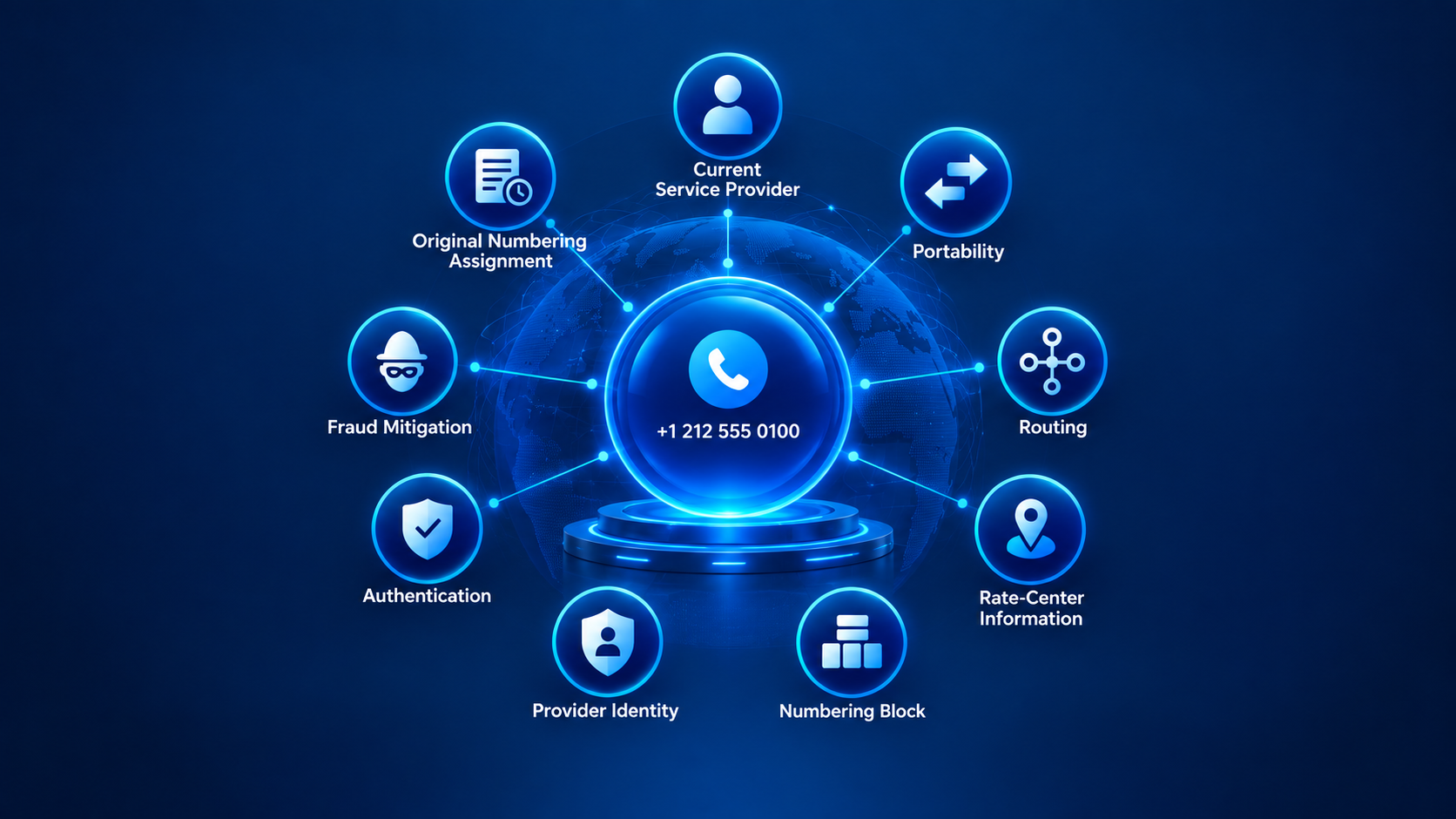
Telecommunications networks depend on accurate identification. When a telephone number is assigned, routed, ported or administered, different systems need to know which service provider or operating company is associated with the relevant numbering resources. An OCN can be one of the identifiers used to establish that relationship.
OCN stands for Operating Company Number. It is not a marketing identifier; it is an industry-facing code used in numbering documentation and databases. Because different systems use different identifiers, confirm which one a specific transaction requires instead of assuming every telecom-related ID is interchangeable.
.webp)
Where a business phone number can travel
Imagine a business receives a U.S. telephone number from a VoIP provider. Over time, that number may be:
- ✓assigned to an end customer
- ✓routed through an originating carrier
- ✓ported from one provider to another
- ✓associated with a local exchange carrier
- ✓represented in industry numbering databases
- ✓used in carrier-to-carrier routing
- ✓linked to a service provider in portability records
If carrier systems cannot correctly associate numbering resources with the right provider, routing and portability processes become more complicated. That is why OCN information is relevant to carriers, CLECs, numbering administrators, resellers and other companies in the U.S. voice ecosystem.
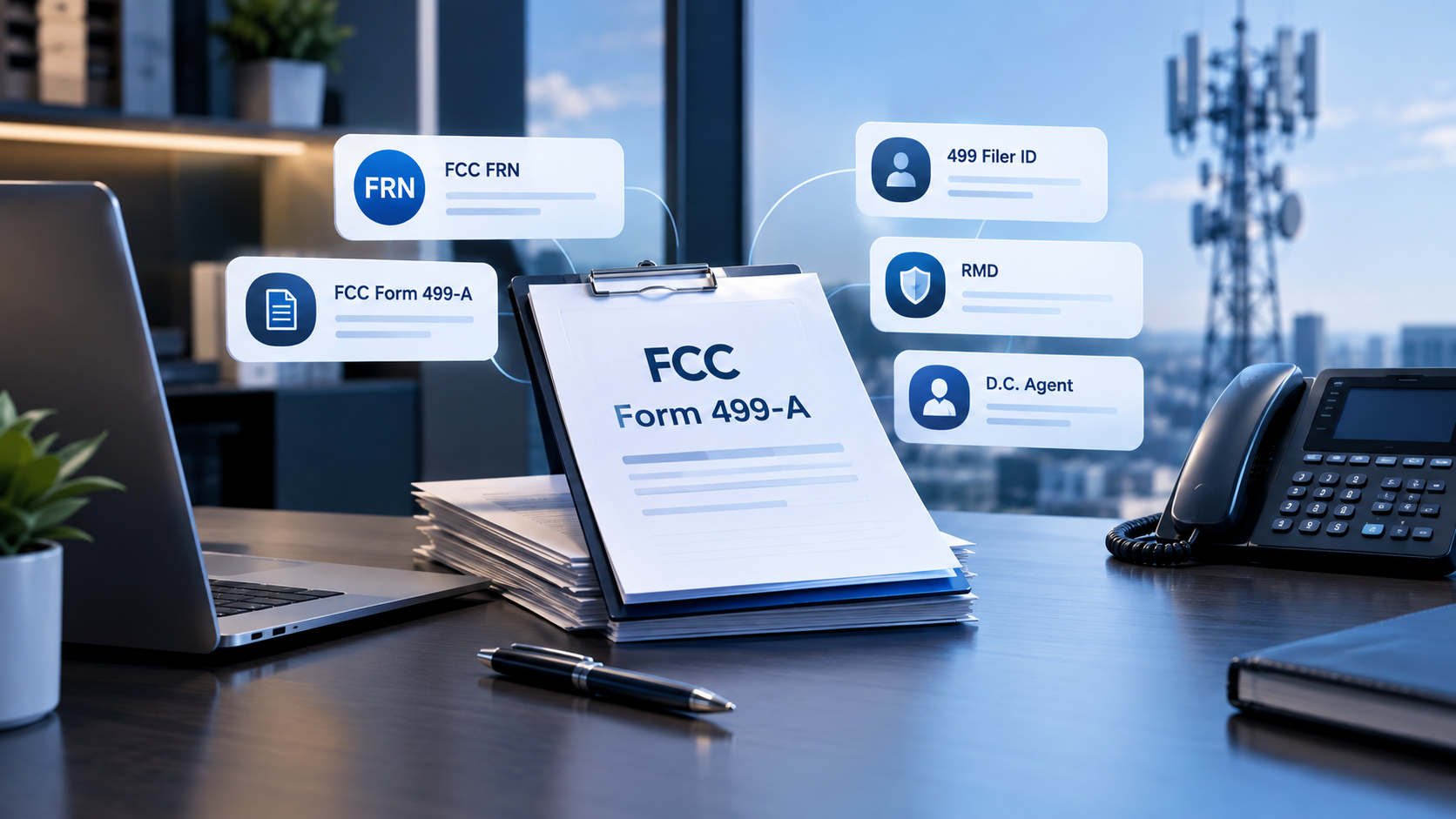
02OCN vs FRN, 499 Filer ID, Company Code & SPID
These identifiers can all relate to the same company without being interchangeable. The exact applicability depends on the company's role and the industry process involved.
| Identifier | Primary context |
|---|---|
| FCC FRN | FCC registration (CORES) |
| FCC 499 Filer ID | USAC / FCC Form 499 reporting |
| OCN | Telecommunications operating-company identification |
| SPID | NPAC service-provider identification |
| Company Code | Telecommunications numbering administration |
How each one differs from an OCN
OCN vs FCC 499 Filer ID
A 499 Filer ID is a six-digit identifier assigned by USAC to each entity that files FCC Forms 499-A/Q, according to USAC's glossary. An OCN is an operating-company identifier used in numbering and industry systems. A company can encounter both without either replacing the other. Our guide to FCC Form 499-A, Filer ID & RMD covers the reporting side.
OCN vs FCC FRN
An FCC Registration Number (FRN) is tied to the FCC's Commission Registration System, known as CORES. USAC states that a service provider must have an FRN before registering for a 499 Filer ID. An FRN should not be treated as an OCN.
OCN vs Company Code
The two terms are closely related in U.S. numbering administration, but they should not automatically be treated as identical in every context. ATIS notes that NECA-assigned Company Codes may be used as OCNs relative to CO Code assignments. If a numbering administrator asks for a Company Code, provide the Company Code. If an industry database requires an OCN, provide the OCN.
OCN vs SPID
The Service Provider Identification Number (SPID) belongs to the NPAC environment. OCN and SPID can relate to the same provider, but they should not be casually swapped. Which one is required depends on the transaction and the system.
Where identifiers can appear for a new provider
For a new provider, the path can involve the steps below. The exact sequence depends on the company's business model.
03OCN and Number Portability
Number portability is where provider identity becomes especially important. A customer can move a telephone number from one provider to another and keep the same number, so the number itself does not tell a routing system which provider currently serves it. The industry relies on centralized, authoritative data systems instead.
iconectiv operates the U.S. Number Portability Administration Center/Service Management System (NPAC/SMS) as Local Number Portability Administrator, and describes NPAC as the central platform that makes U.S. number portability possible. Our guide, What Is iconectiv?, covers that role in more detail.
The number stays the same. The service-provider relationship changes, so portability systems need reliable provider information.
Identifiers you may meet on a porting issue
04OCN and Routing Data (LERG)
The Local Exchange Routing Guide (LERG) is part of the broader U.S. routing-data environment. Routing data helps carriers understand how telephone numbers and numbering resources are tied to routing arrangements. iconectiv's Telecom Routing Administration provides numbering, routing and rating data, including LERG-related products used across the industry.
To an end user, a number looks simple: +1 202 XXX XXXX. A carrier sees considerably more behind it. Routing systems may need to consider:
- ✓NPA (area code)
- ✓NXX (exchange prefix)
- ✓Thousands-block
- ✓OCN
- ✓LRN
- ✓Carrier
- ✓Rate center
- ✓Switch
- ✓Routing destination
- ✓Portability status
Understanding how these pieces relate helps telecom professionals troubleshoot routing problems more effectively.
05OCN for VoIP Providers & Resellers
Modern VoIP providers often work across several layers of the telecom ecosystem: SIP trunks, DIDs, toll-free numbers, hosted PBX, cloud communications, wholesale voice, international termination, call-center services, APIs, SMS and reseller services. The more directly a company takes part in numbering and carrier operations, the more important industry identifiers become.
Facilities-based carrier vs reseller
A reseller may obtain numbering resources or voice services through another provider, so it should not assume it automatically holds every identifier its upstream carrier does. Its regulatory and numbering status should be evaluated against its actual business model.
Resellers should be especially careful
A reseller may sell services under its own brand while obtaining network services from another provider. That does not mean it inherits the upstream provider's OCN, and a customer-facing telecom brand does not establish a numbering identifier. Before making a public statement about an OCN, verify it through an authoritative source.
Working with multiple carriers
Suppose a company uses Carrier A for U.S. DIDs, Carrier B for outbound termination, Carrier C for toll-free and Carrier D for international voice. Each may have different numbering and routing relationships, so keep an accurate internal record of the identifiers tied to each one.
06Why OCN Accuracy Matters
Incorrect provider information can create real operational problems, especially when a provider works with several carriers.
How OCN information helps in troubleshooting
Consider a customer who says, "We ported our number, but incoming calls are still reaching the old provider." An engineer might check:
- ✓The telephone number
- ✓Current porting status
- ✓Service-provider identity
- ✓SPID
- ✓OCN
- ✓LRN
- ✓Routing data
- ✓Carrier switch information
- ✓Downstream routing
- ✓Carrier provisioning
07Common OCN Mistakes
Assuming OCN equals Filer ID
It does not. A Filer ID is associated with FCC Form 499 filing.
Assuming every VoIP reseller automatically has an OCN
The provider's actual role and numbering arrangements matter.
Treating OCN and SPID as interchangeable
They are distinct identifiers used in different industry contexts.
Publishing an OCN without verification
If the identifier is wrong, the error can spread into customer documentation and carrier onboarding.
Relying on outdated documentation
Telecommunications systems and administrative processes evolve. Verify current requirements with the relevant administrator.
08Practical OCN Checklist for a VoIP Provider
Keep an internal compliance and numbering record covering the items below, where applicable. The aim is not to collect identifiers for their own sake, but to maintain a reliable operational record.
- ✓Legal company name
- ✓DBA
- ✓FCC FRN
- ✓FCC Form 499 Filer ID
- ✓OCN
- ✓Company Code
- ✓NPAC SPID
- ✓Numbering resources
- ✓Carrier relationships
- ✓Regulatory contacts
- ✓Relevant licenses and authorizations
- ✓Carrier agreements
09Who Administers What
An OCN is only one component of the telecom identity structure. Knowing which organization controls which process is essential.
10Frequently Asked Questions
An OCN is an Operating Company Number, a four-character alphanumeric identifier used to identify providers of local telecommunications service in relevant U.S. telecommunications systems.
No. A 499 Filer ID is a six-digit identifier assigned by USAC to entities filing FCC Forms 499-A/Q. An OCN serves a different telecommunications-industry identification purpose.
No. An FRN identifies an entity in the FCC's CORES registration system. It is separate from an OCN.
Not necessarily. The answer depends on the provider's role, numbering arrangements and the industry processes that apply to it.
No. A SPID is a service-provider identifier used in the NPAC environment. An OCN and a SPID can be associated with the same provider but are not universally interchangeable.
OCNs can be relevant to numbering, routing, portability and carrier operations. They help identify the telecommunications provider associated with relevant industry records.
A provider should verify the identifier through the applicable authoritative telecommunications administrator or database rather than relying on an unverified third-party website.
A reseller should not assume that it can. The appropriate identifier depends on the reseller's own role and the relevant telecommunications process.
11Conclusion
An OCN is a small identifier with an important place in the U.S. telecommunications ecosystem. For VoIP providers, carriers, resellers and telecom engineers, the key is to understand how an OCN differs from an FCC FRN, a 499 Filer ID, a Company Code and a SPID. They belong to different systems and processes, and treating them as interchangeable creates confusion during carrier onboarding, numbering, routing, portability and compliance work.
The most reliable approach is to keep accurate company records, verify identifiers through authoritative sources, and understand the role each identifier plays.
OCN knowledge and NexGen Voice
NexGen Voice Technologies works across VoIP, SIP trunking, DID numbers, business communications, wholesale voice and cloud communications. Understanding numbering and provider identifiers helps explain how telephone numbers move through the telecommunications ecosystem.
This guide is educational. It does not publish NexGen Voice's own registration numbers or regulatory identifiers. For questions about the identifiers relevant to a specific service, contact our team.
Further reading from authoritative sources: the ATIS Telecom Glossary, USAC, iconectiv and the FCC.