iconectiv is a telecommunications infrastructure company whose systems and services support important functions across U.S. communications networks.
For people outside the telecom industry, iconectiv may not be a familiar name. Yet telecommunications professionals can encounter iconectiv in areas involving number portability, telecom routing, numbering data, carrier identification, STIR/SHAKEN, caller-ID authentication, telecommunications databases, and regulatory and compliance workflows.
iconectiv currently identifies itself as the U.S. Local Number Portability Administrator (LNPA) and operates the U.S. Number Portability Administration Center (NPAC). It also serves as the U.S. Secure Telephone Identity Policy Administrator (STI-PA). That combination makes iconectiv particularly relevant to VoIP providers, carriers, numbering administrators and telecom engineers.
01Why Is iconectiv Important?
The telephone network depends on large amounts of accurate information. A telephone number is not simply a string of digits. Behind that number can be information concerning the current service provider, the original numbering assignment, portability, routing, rate-center information, the numbering block, provider identity, authentication and fraud mitigation.
When a customer moves from one carrier to another while keeping the same telephone number, the network needs authoritative information about that change. When a VoIP call is placed, routing systems need accurate numbering information. When a provider signs a call using STIR/SHAKEN, the trust framework needs appropriate governance and certificate infrastructure.
Different systems handle these responsibilities. iconectiv is involved in several of them.
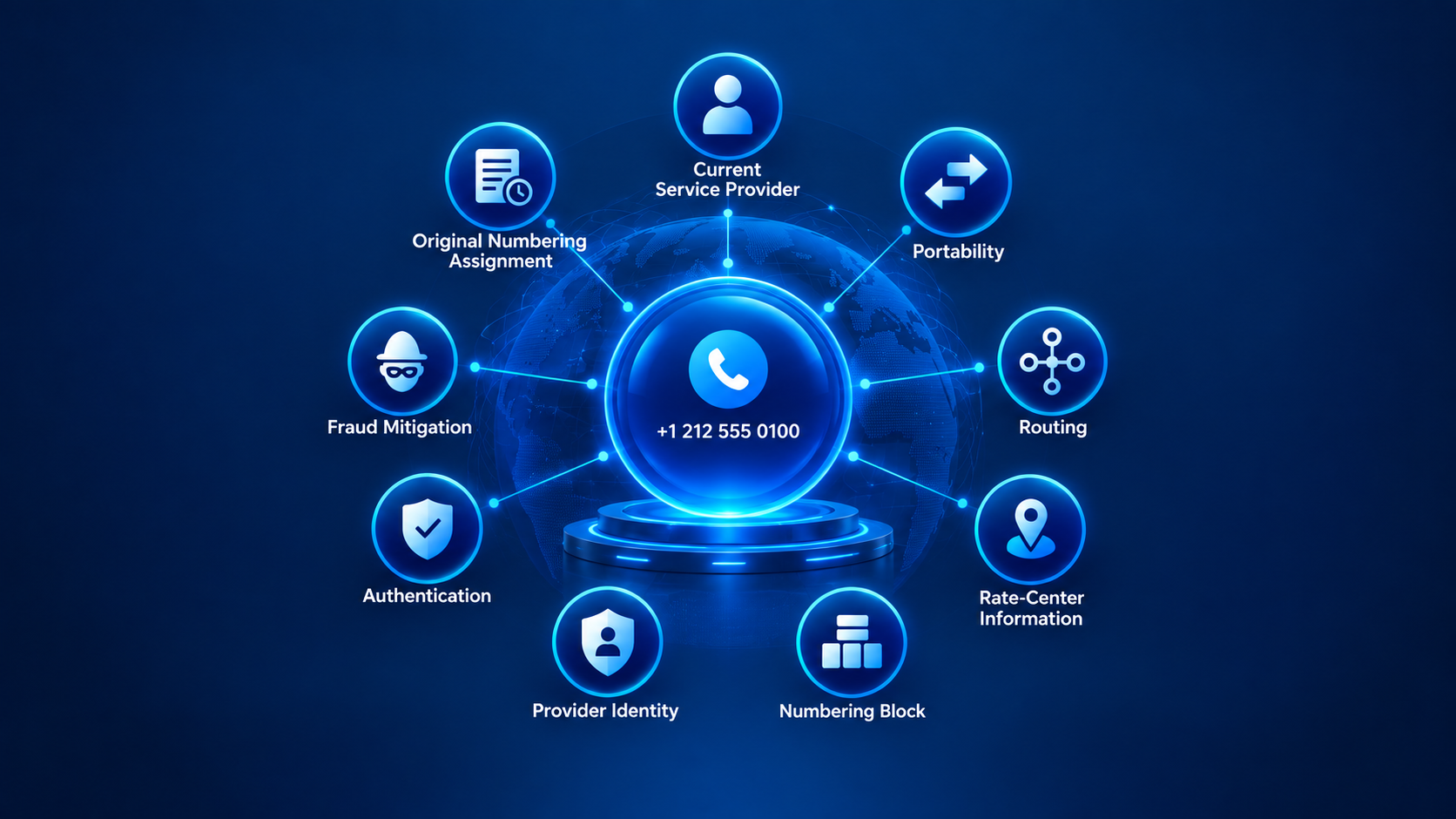
What sits behind a telephone number
Behind a single number, telecommunications systems can hold information concerning:
- ✓current service provider
- ✓original numbering assignment
- ✓portability
- ✓routing
- ✓rate-center information
- ✓numbering block
- ✓provider identity
- ✓authentication
- ✓fraud mitigation
02iconectiv and the NPAC
One of iconectiv's most important telecommunications responsibilities is its role as the U.S. Local Number Portability Administrator. The Number Portability Administration Center (NPAC) is the central infrastructure used for U.S. telephone-number portability.
iconectiv explains that when consumers change service providers while keeping their telephone numbers, the portability transaction flows through NPAC/SMS.
A simple example
A customer has the number 202-555-0100. The customer originally receives the number from Provider A. Later, the customer moves to Provider B but wants to keep the same number.
The number itself does not change. The service-provider relationship does. The portability system therefore needs to reflect that change, and that is the type of problem NPAC is designed to support.
Why number portability matters to VoIP
Number portability is extremely important for VoIP businesses. A business may have used the same telephone number for:
- ✓years of advertising
- ✓customer support
- ✓banking
- ✓websites
- ✓invoices
- ✓email signatures
- ✓Google Business profiles
- ✓customer databases
Changing the telephone number can therefore be expensive and disruptive. Portability allows customers to change service providers without necessarily abandoning their established number. For a VoIP provider, successful porting can therefore be an important part of customer experience. The technical process requires accurate information.
03iconectiv, Routing & OCN
iconectiv is also associated with telecommunications routing and numbering information. The Telecom Routing Administration provides industry numbering, routing and rating data and supports products used by telecommunications providers.
This matters because a telephone number alone does not tell a carrier everything it needs to know. A number can be analyzed using components such as:
- ✓NPA
- ✓NXX
- ✓thousands-block
- ✓LRN
- ✓OCN
- ✓routing information
- ✓portability information
- ✓switch information
Telecom engineers use this information to understand how calls should move through networks.
iconectiv and OCN
OCNs are part of the broader numbering and provider-identification ecosystem. An OCN identifies a telecommunications provider or operating company in relevant systems. ATIS defines an OCN as a four-place alphanumeric code that uniquely identifies providers of local telecommunications service.
iconectiv's numbering and routing environment can therefore intersect with OCN information. However, it is important not to oversimplify the relationship.
The correct approach is to identify the exact administrative function involved.
04iconectiv and STIR/SHAKEN
iconectiv has another major role that is increasingly important to VoIP providers: Secure Telephone Identity Policy Administrator (STI-PA).
STIR/SHAKEN is a framework designed to authenticate caller-ID information and help reduce illegal spoofing and fraudulent calls. At a high level:
- 1A provider originates a call.
- 2The provider determines the appropriate caller identity and attestation.
- 3The call is signed using STIR/SHAKEN.
- 4The SIP signaling carries an Identity header.
- 5A terminating provider can verify the signature.
- 6The terminating network can use the authentication information as part of its call treatment.
The trust framework requires governance. That is where the STI-PA function becomes important. For more detail, see our guides to the STIR/SHAKEN Policy Administrator and the STIR/SHAKEN certificate.
What does the STI-PA do?
The STI-PA operates within the STIR/SHAKEN governance framework. One important function is the management of Service Provider Code (SPC) tokens. An SPC token is associated with a service provider's authorization to obtain a certificate from an approved Certification Authority.
| Component | What it is |
|---|---|
| STI-PA | Manages policy and trust-framework functions. |
| STI-CA | An authorized Certification Authority issues certificates. |
| Certificate | The cryptographic credential used for signing. |
| Attestation | A statement made about the caller identity and the originating provider's relationship to that identity. |
These are different components.
05iconectiv vs FCC & NPAC Access
Another common misunderstanding is treating iconectiv as a government regulator. It is not. The FCC is the federal regulator responsible for telecommunications rules and enforcement within its jurisdiction. iconectiv operates important telecommunications infrastructure and administrative functions. USAC separately administers several FCC-related programs and filing systems. NECA performs other telecommunications administration functions. ATIS develops industry standards and technical guidance.
These organizations interact with the same telecom ecosystem, but they have different responsibilities.
| Organization | General role |
|---|---|
| FCC | Federal telecommunications regulator |
| USAC | Administrator of several FCC programs/processes |
| NECA | Telecommunications administration, including Company Code functions |
| iconectiv | Number portability, routing data and STI-PA functions |
| ATIS | Telecommunications standards and industry technical work |
Who to contact for what
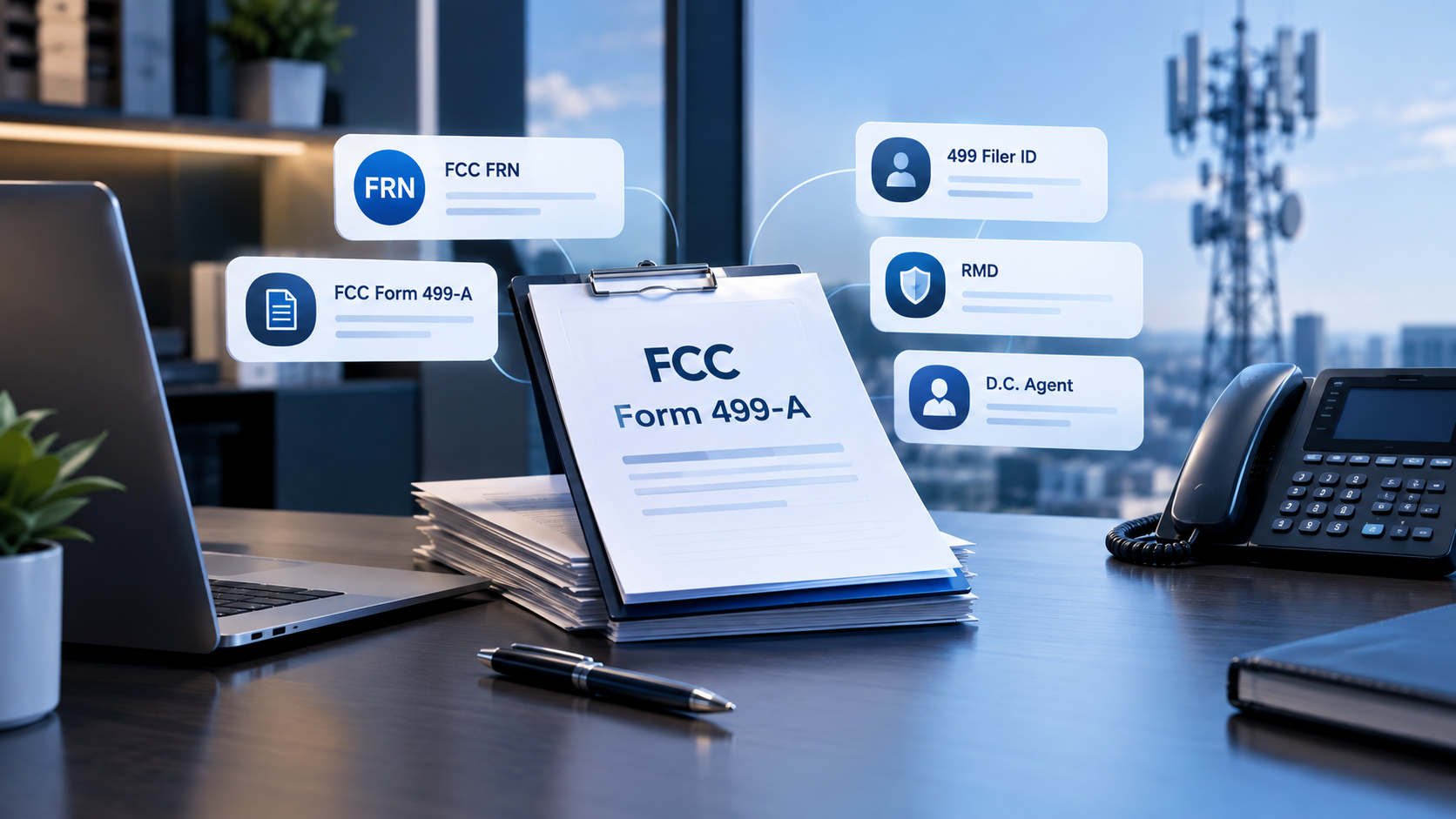
This distinction is important when researching telecom compliance. If a company has a question about FCC registration, it should not automatically contact iconectiv. If the issue concerns NPAC, iconectiv may be relevant. If the issue concerns a 499 Filer ID, USAC is relevant. If the issue concerns federal telecommunications rules, the FCC is the appropriate regulator. Our guide to FCC Form 499-A, Filer ID & RMD covers the reporting side.
iconectiv and NPAC access
NPAC is not simply a public telephone-number lookup website. iconectiv states that NPAC access is available to service providers and providers of telecom-related services under applicable access rules. It also offers certain specialized data services for qualified organizations.
This distinction matters because public reverse-lookup websites should not automatically be treated as authoritative substitutes for industry databases. A telecom provider dealing with portability should use the appropriate authorized source for the specific task.
06Porting Data, Fraud & Identity
Why accurate porting data matters
Porting data can be relevant beyond basic call routing. iconectiv describes applications involving:
For example, a telephone number may have originally been issued by a wireless carrier but later ported to another type of provider. A database that knows the current provider and porting history can provide information that a simple number-prefix lookup cannot. This is increasingly important in fraud prevention.
iconectiv and telecom fraud
Fraudsters can exploit telephone numbers in several ways. Examples include:
- ✓caller-ID spoofing
- ✓account takeover
- ✓social engineering
- ✓robocalling
- ✓traffic pumping
- ✓artificial traffic
- ✓number recycling
- ✓misuse of ported numbers
Accurate carrier and numbering data can help organizations evaluate risk. iconectiv's current materials specifically describe number-portability data as useful for fraud mitigation and risk assessment.
iconectiv and the future of telecom identity
Telephone numbers are increasingly part of digital identity. A business phone number may be associated with:
- ✓customer accounts
- ✓authentication
- ✓payment services
- ✓CRM systems
- ✓call centers
- ✓SMS
- ✓two-factor authentication
- ✓fraud detection
That makes reliable telephone-number information increasingly valuable. The telecom industry therefore needs authoritative systems that can track provider relationships, portability and trust.
07Practical Examples
Practical example: a customer ports a number
Imagine a company using Provider A. The company has +1 202-555-0100. It decides to move to Provider B, and the customer wants to retain the number. The workflow can involve:
The customer experiences this as: “I kept my phone number.” Behind the scenes, multiple telecommunications systems must maintain accurate data.
Practical example: STIR/SHAKEN
Now consider an outbound call. A customer using a VoIP service calls another U.S. number. The originating provider determines whether it can authenticate the caller identity and what attestation is appropriate. The call is signed. The terminating provider receives the call and verifies the signature.
The STIR/SHAKEN ecosystem depends on a trust model involving governance, certificates and authorized participants. iconectiv's STI-PA role is one component of this ecosystem. It is not the same as being the carrier that physically transports the call.
08Common iconectiv Misunderstandings
“iconectiv is the FCC”
Incorrect. iconectiv and the FCC have different roles.
“iconectiv owns every telephone number”
Incorrect. iconectiv operates specific industry infrastructure; it does not own every telephone number.
“iconectiv is the carrier”
Not necessarily. iconectiv can operate industry infrastructure without being the retail voice carrier serving an end customer.
“iconectiv issues every STIR/SHAKEN certificate”
This is an important technical distinction. The Policy Administrator and Certification Authority functions are separate.
“NPAC is just a public lookup database”
No. NPAC is industry infrastructure used by authorized participants for number portability administration.
09Why iconectiv Matters to NexGen Voice
For a company operating in VoIP, SIP trunking, DID numbers and wholesale telecommunications, iconectiv is relevant because telecom services depend on authoritative numbering and trust infrastructure. A professional VoIP provider should understand:
- ✓numbering
- ✓portability
- ✓routing
- ✓carrier identification
- ✓caller-ID authentication
- ✓STIR/SHAKEN
- ✓regulatory registration
- ✓fraud mitigation
Understanding iconectiv is therefore part of understanding how modern U.S. telecommunications works.
This guide is educational. It does not describe NexGen Voice's own participation in any iconectiv program, OCN, NPAC access, STI-PA process or other regulated system. For questions about a specific service, contact our team.
10Frequently Asked Questions
iconectiv is a telecommunications infrastructure company involved in services including U.S. number portability administration, routing/numbering data and STIR/SHAKEN Policy Administrator functions.
iconectiv operates the U.S. NPAC/SMS as the Local Number Portability Administrator.
No. The FCC is the federal regulator; iconectiv operates telecommunications infrastructure and administrative functions.
The STI-PA is the Policy Administrator function within the STIR/SHAKEN trust framework.
The Policy Administrator and Certification Authority functions are distinct. Providers obtain certificates through authorized Certification Authorities under the applicable trust framework.
NPAC is the Number Portability Administration Center/Service Management System used to administer U.S. telephone-number portability.
It supports the industry process that allows customers to retain telephone numbers when changing service providers.
iconectiv's role is primarily telecommunications infrastructure and administration rather than functioning as a typical retail VoIP provider.
Because iconectiv-related systems and functions intersect with number portability, routing data, provider identification and STIR/SHAKEN.
11Conclusion
iconectiv is an important part of the infrastructure behind modern U.S. telecommunications. Its responsibilities and industry roles span areas that affect number portability, routing information, provider identification and caller-ID trust.
For VoIP providers and telecom professionals, the key lesson is that telecommunications does not rely on one database or one organization. The ecosystem contains multiple specialized systems and administrators.
Understanding the distinction between the FCC, USAC, NECA, ATIS and iconectiv makes it easier to understand how numbering, regulatory registration, portability, routing and caller-ID authentication work together.
Further reading from authoritative sources: iconectiv, the ATIS Telecom Glossary, USAC and the FCC.
.webp)